11  Hype and Evidence: Paradigms Under Revision

Few fields generate as much noise as longevity. This chapter sorts signal from sales — the paradigms the field has quietly discarded, the claims that outran their evidence, and the criteria by which a non-specialist may tell one from the other.

Part IV assembled what looks, from a distance, like an arsenal: methylation clocks that compress decades into a vial of blood, composite endpoints engineered to satisfy a regulator, biomarker panels distilled to a clinical handful, target-engaged senolytics, partial reprogramming therapies edging towards first-in-human dosing. From close up, the arsenal is mostly proof of concept. This chapter — which concludes the scientific and technical section — reads the inventory honestly. It separates the genuine surprises of the last decade from the claims that travelled further than their evidence, and supplies the conceptual toolkit a non-specialist needs to navigate an accelerating field without being swept along by either of its dominant moods. We begin with a paradigm the field has already discarded, continue with three it has not yet quite been willing to, and end with the six questions a reader is entitled to ask of any longevity claim before believing it.

The closing of a scientific Part is a peculiar moment in a work of this kind. Ten chapters have been spent arguing that something has happened: hallmarks identified, clocks built, senescent cells cleared, identity factors pulsed, biomarker panels distilled, trials designed in a way that would have been unthinkable a decade ago (Kennedy et al., 2014; López-Otín et al., 2023; Partridge et al., 2020). All of that is true. It is also true that essentially none of it has yet been shown to make a person live a longer, healthier life. To carry both facts forward at once is the central discipline this chapter asks of its reader.

The discipline matters because the noise around longevity research is not noise of the ordinary kind. It is amplified by three converging pressures that are individually unsurprising but cumulatively distorting: a corporate sector with concentrated incentives to overstate clinical readiness, a cohort of public-facing scientists whose professional success is increasingly entangled with the public’s appetite for hope, and a media ecosystem that treats the difference between a press release and a peer-reviewed result as a stylistic preference. Against that background, an honest closing of the science requires more than a summary. It requires the explicit tools by which a thoughtful reader from outside biomedicine can hear an evidential claim about ageing and judge it on its merits.

11.1 When a paradigm is discarded — the antioxidant case

The strong form of the free-radical theory of ageing, first proposed in 1956, was the most influential mechanistic claim ever made about why we grow old: reactive oxygen species, the unavoidable by-product of mitochondrial respiration, accumulate over a lifetime and cause the molecular damage that is ageing (Harman, 1956). The theory was beautiful, productive, and — in its bold form — wrong. Its trajectory remains the field’s clearest worked example of how a paradigm comes to be discarded, and worth attending to because the same pattern recurs.

The theory had three properties that gave it long life. It offered a clean mechanism (oxidative damage to macromolecules), a clean intervention (administer antioxidants), and a clean prediction (reduced morbidity and mortality). Across the 1990s and early 2000s the prediction was tested at industrial scale. Trials enrolled hundreds of thousands of participants and ran for years; supplements of β-carotene, vitamin A, vitamin C, vitamin E and selenium were given alone or in combinations, in primary and secondary prevention, in healthy adults and in those with cardiovascular risk. The Bjelakovic meta-analysis pooled sixty-eight randomised trials and 232,606 participants and is the result most cited in subsequent reviews: when the analysis was restricted to trials with the lowest risk of bias, antioxidant supplementation was associated with a small but statistically significant increase in all-cause mortality, with β-carotene, vitamin A and vitamin E each contributing independently (Bjelakovic et al., 2007). The intervention drawn from the theory did not extend life. In some forms it shortened it.

The point worth keeping is not that the theory was useless — oxidative biology remains a productive corner of cell physiology, and some downstream refinements survived — but that an entire generation of clinical practice had been built on a leap from mechanism to intervention that the data did not support. The mistake was structural. It assumed that intervening on a downstream consequence would reverse its upstream cause, an inference whose plausibility scales with the mechanism’s neatness and whose validity has nothing to do with it. The lesson is older than ageing research; it underwrites the entire history of biomedicine’s collisions with appealing surrogates. It is rehearsed here because the field is making the same move in fresh clothes, three times over, and the next section examines those moves one by one.

A second feature of the antioxidant case deserves a sentence on its own. The retreat from the theory was not heralded by an announcement. There was no headline declaring the paradigm disconfirmed; supplement sales continued, public belief in the antioxidant–mortality link persisted, and the theory continues to be taught in introductory textbooks in its original form. Paradigms in biomedicine are not discarded by communiqué. They are discarded slowly, asymmetrically, and often only by specialists, while the popular framing of the claim long outlives the evidence that supported it. The reader should expect the same of any paradigm now in vogue.

NoteKey concept — three signatures of a paradigm that will be revised

The antioxidant case displays a recurring pattern, and recognising it in advance is half the work of reading a longevity claim critically. A paradigm is likely to be revised when it combines: (i) a single-cause mechanism in a system whose phenomenology is multidimensional; (ii) an intervention whose efficacy in animal models is large but whose human trials report effects an order of magnitude smaller, often with widening confidence intervals as sample sizes grow; and (iii) a public narrative that has decoupled from the technical literature, with media framing persisting after the clinical signal has faltered. None of these is sufficient on its own. Together they describe nearly every claim that has cost the field credibility, including the three to which we now turn.

11.2 Three case studies in contemporary overreach

11.2.1 NAD+ precursors — when a biomarker is mistaken for a benefit

Cellular concentrations of NAD+ decline with age, and the biology of that decline is solid (Chapter 5). Restoring NAD+ in old mice produces a range of measurable improvements, from mitochondrial function to muscle endurance, in protocols whose magnitude is real and reproducible. The translational claim — that oral precursors such as nicotinamide riboside (NR) and nicotinamide mononucleotide (NMN) raise NAD+ in humans and thereby slow ageing — has been one of the most commercially active in the supplement market for a decade (Migaud et al., 2024).

The clinical record is more sobering. Supplementation reliably raises blood NAD+, often two- or threefold, and is well tolerated (Damgaard & Treebak, 2023). The benefits beyond that depend on the endpoint. A randomised trial of NR in patients with peripheral artery disease (the NICE trial) found a modest improvement in six-minute walking distance — around seventeen metres relative to placebo — in a small phase II study whose confidence interval brushed against zero, with the per-protocol estimate of around thirty metres only marginally larger (McDermott et al., 2024; Vinten et al., 2025). A pilot in older adults with mild cognitive impairment produced the target rise in blood NAD+ but no change in cognition (Orr et al., 2023). A subsequent combined trial of NR with exercise in older adults with hypertension found that the addition of NR did not lower systolic blood pressure more than the same exercise programme with placebo. The pattern across these studies is the one the chapter is preparing the reader to notice: the upstream biomarker moves as expected; the downstream outcome that matters to a patient moves much less, or not at all. A raised NAD+ is a property of the bottle. A longer or healthier life is a property of the person.

The case is not closed against NAD+ biology. It is closed against the framing in which a moved biomarker is reported as a clinical victory. That framing is, as Section 10.3 argued formally, the field’s structural temptation; the NAD+ story is its most familiar instance.

11.2.2 Taurine — the cross-sectional trap

In 2023, an ambitious multi-species study proposed that the age-related decline in circulating taurine was not just a correlate of ageing but a driver of it. The paper made claims at three levels — that taurine concentrations fall with age in mice, monkeys and humans; that taurine supplementation extends healthspan in mice and lifespan in worms and rodents; and that lower taurine levels in humans correlated with several age-related diseases (Singh et al., 2023). The mouse and worm data were strong, the cross-species architecture was striking, and the human correlations were widely reported as evidence that taurine deficiency might “drive” ageing in people.

A reanalysis in 2025 challenged the human side of that claim cleanly. Marcangeli and colleagues measured circulating taurine in 137 physically inactive and physically active men aged 20–93 and looked for the precise associations the original hypothesis would predict — with chronological age, muscle mass, strength, physical performance and mitochondrial function. They found none (Marcangeli et al., 2025). The result is decisive in the way the field needs more of: a methodologically clean human dataset, well-characterised participants, the exact associations the original hypothesis would predict, and a flat null across all of them. It does not refute the worm or mouse biology. It refutes the leap to humans.

The taurine episode illustrates a particular kind of overreach worth naming. The original report combined a cross-sectional observation (older people have less circulating taurine) with an interventional observation in animals (giving them taurine helps), and presented the combination as evidence that taurine deficiency is causal in human ageing. The combination feels persuasive because both halves are real, but the inference is invalid. Many things decline with age in humans because they decline with poor health, sedentary behaviour, comorbidity or polypharmacy; restoring them in people who declined for those reasons may do nothing. This is the cross-sectional trap, and a longitudinal study in matched people, of the kind Marcangeli’s group performed, is what it takes to fall out of it.

11.2.3 Rapamycin — when phase II does not predict phase III

Rapamycin and its analogues have the strongest animal evidence of any candidate geroprotector. The drug extends lifespan in mice across strains and sexes, the result has been independently replicated, and the mechanism — partial inhibition of mTOR signalling — connects directly to several pathways of ageing (Harrison et al., 2009; Harrison et al., 2014; Ivimey-Cook et al., 2025). The human translation of that evidence is the case study the field most wants to win.

It has not been won yet, and the most informative failure to date is the resTORbio programme. RTB101, an orally bioavailable mTOR-pathway inhibitor, was developed against laboratory-confirmed respiratory tract infections in older adults — an endpoint chosen because age-related decline in interferon-stimulated antiviral immunity is a tractable correlate of immunosenescence. A phase 2b trial was equivocal in its first pre-specified analysis but, in a second pre-specified analysis pooling the two parts of the study, showed a statistically significant reduction in laboratory-confirmed infections at one dose level. The signal was published, the drug was advanced to a confirmatory phase III trial in 1,024 older adults, and the primary endpoint — clinically symptomatic respiratory illness — moved no further than placebo: 26% in the treatment arm against 25% in the control arm, with an odds ratio of 1.07 (90% CI 0.80–1.42; p = 0.65) (Mannick et al., 2021). The biological target was engaged, with interferon-stimulated antiviral genes measurably upregulated in treated patients, and the drug was safe. The disease outcome was a flat null. The company shortly afterwards wound down its longevity programme.

The rapamycin case is the cleanest available illustration of why phase II results in geroscience are so often overinterpreted. A drug whose preclinical evidence is genuinely strong, whose mechanism is genuinely understood, and whose target is genuinely engaged, can still fail to produce a clinical effect at the scale at which it must be tested. The reasons are several and unresolved — heterogeneity of host immunity in real populations, the gap between target engagement and clinically meaningful pathway modulation, the absence of an appropriately sensitive disease endpoint — but the empirical fact is now stable enough to deserve a name. The PEARL trial of low-dose rapamycin, which we have already met, continues this case at a different scale: a community-recruited study reporting biomarker signals at one year, valuable as a model of decentralised geroscience trials but not yet evidence that rapamycin lengthens healthy life (Moel et al., 2025).

Table 11.1: Three contemporary cases of overreach in longevity research. Each pattern recurs, and recognising the kind of overreach is the easiest way to anticipate the next instance.
Case What was claimed What the evidence supports What kind of overreach
NAD+ precursors Restoring NAD+ slows ageing in people Biomarker rises reliably; clinical outcomes mostly null or small (Damgaard & Treebak, 2023; Vinten et al., 2025) Moved upstream marker reported as downstream benefit
Taurine Taurine deficiency drives human ageing Animal effects real; human cross-sectional correlations not replicated longitudinally (Marcangeli et al., 2025; Singh et al., 2023) Cross-sectional correlate sold as causal driver
Rapamycin (RTB101) mTOR inhibition would prevent infections in older adults Phase III in 1,024 participants matched placebo on clinical endpoint (Mannick et al., 2021) Promising phase II signal that did not survive phase III

11.3 Anatomy of a longevity claim — a conceptual toolkit

The reader who comes to longevity from outside biomedicine needs less a list of warnings than a small set of categories with which to dismantle a claim and inspect its parts. Five suffice for almost every case the chapter has considered.

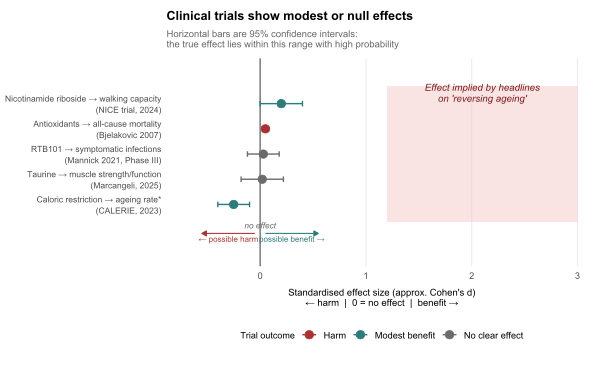
The first is effect size. A result reported as “statistically significant” tells the reader that an effect probably exists. It does not tell the reader whether the effect is large enough to matter. In a trial of a thousand participants, a one-per-cent reduction in some endpoint can clear the significance threshold while being clinically meaningless; a thirty-per-cent reduction in a small trial may fail to clear it while pointing at a genuinely important phenomenon. The reader’s first move is to find the point estimate and the confidence interval and ask, if true, would this matter to a patient? Figure 11.1 places several recent geroprotector trials on a common scale to make that question visual.

Code
library(ggplot2)

palette_book <- c("harm"         = "#a83232",
                  "null"         = "#6b6b6b",
                  "modest benefit" = "#2c7a7a")

# ── 1. Data ordered from smallest to largest effect ─────────────────────────
d <- data.frame(
  label = c(
    "Antioxidants → all-cause mortality\n(Bjelakovic 2007)",
    "RTB101 → symptomatic infections\n(Mannick 2021, Phase III)",
    "Nicotinamide riboside → walking capacity\n(NICE trial, 2024)",
    "Caloric restriction → ageing rate*\n(CALERIE, 2023)",
    "Taurine → muscle strength/function\n(Marcangeli, 2025)"
  ),
  effect    = c( 0.05,  0.03,  0.20, -0.25,  0.02),
  lower     = c( 0.02, -0.12,  0.00, -0.40, -0.18),
  upper     = c( 0.08,  0.18,  0.40, -0.10,  0.22),
  direction = c("harm", "null", "modest benefit", "modest benefit", "null"),
  stringsAsFactors = FALSE
)

# ── 2. Reorder by effect ─────────────────────────────────────────────────────
d <- d[order(d$effect), ]

# ── 3. Build numeric positions OUTSIDE the data frame ───────────────────────
n         <- nrow(d)
pos_vals  <- seq_len(n)
lbl_vals  <- setNames(d$label, pos_vals)

d$ypos <- pos_vals

# ── 4. Plot ──────────────────────────────────────────────────────────────────
ggplot(d, aes(x = effect, y = ypos, colour = direction)) +

  # Headlines band
  annotate("rect",
           xmin = 1.2, xmax = 3.0, ymin = 0.3, ymax = n + 0.7,
           fill = "#f4c8c8", alpha = 0.5) +
  annotate("text",
           x = 2.1, y = n + 0.45,
           label    = "Effect implied by headlines\non 'reversing ageing'",
           colour   = "#7a1a1a", fontface = "italic",
           size = 3.4, hjust = 0.5, lineheight = 0.95) +

  # Reference line (no effect)
  geom_vline(xintercept = 0, colour = "grey40", linewidth = 0.6, linetype = "solid") +
  annotate("text",
           x = 0, y = 0.05,
           label = "no effect", colour = "grey40",
           size = 2.9, hjust = 0.5, vjust = 0, fontface = "italic") +

  # Directional arrows
  annotate("segment",
           x = 0.05, xend = 0.55, y = -0.15, yend = -0.15,
           arrow = arrow(length = unit(0.18, "cm"), type = "closed"),
           colour = "#2c7a7a", linewidth = 0.5) +
  annotate("text", x = 0.30, y = -0.35,
           label = "possible benefit →", colour = "#2c7a7a", size = 2.8, hjust = 0.5) +
  annotate("segment",
           x = -0.05, xend = -0.55, y = -0.15, yend = -0.15,
           arrow = arrow(length = unit(0.18, "cm"), type = "closed"),
           colour = "#a83232", linewidth = 0.5) +
  annotate("text", x = -0.30, y = -0.35,
           label = "← possible harm", colour = "#a83232", size = 2.8, hjust = 0.5) +

  # 95% CIs and points
  geom_errorbarh(aes(xmin = lower, xmax = upper),
                 height = 0.22, linewidth = 0.65) +
  geom_point(size = 3.6) +

  scale_colour_manual(values = palette_book,
                      labels = c("harm"           = "Harm",
                                 "null"           = "No clear effect",
                                 "modest benefit" = "Modest benefit")) +

  scale_y_continuous(
    breaks = pos_vals,
    labels = lbl_vals,
    expand = expansion(add = 1.1)
  ) +

  coord_cartesian(xlim = c(-0.70, 3.00), clip = "off") +

  labs(
    title    = "Clinical trials show modest or null effects",
    subtitle = "Horizontal bars are 95% confidence intervals:\nthe true effect lies within this range with high probability",
    x        = "Standardised effect size (approx. Cohen's d)\n← harm  |  0 = no effect  |  benefit →",
    y        = NULL,
    colour   = "Trial outcome"
  ) +

  theme_minimal(base_size = 11.5) +
  theme(
    plot.title         = element_text(face = "bold", size = 12.5),
    plot.subtitle      = element_text(size = 9.5, colour = "grey40", margin = margin(b = 8)),
    panel.grid.major.y = element_blank(),
    panel.grid.minor   = element_blank(),
    legend.position    = "bottom",
    legend.title       = element_text(size = 9),
    axis.text.y        = element_text(size = 8.5, lineheight = 1.1),
    axis.title.x       = element_text(size = 9.5, margin = margin(t = 6)),
    plot.margin        = margin(t = 10, r = 15, b = 25, l = 5)
  )
Figure 11.1: Standardised effect sizes (illustrative, approx. Cohen’s d) from selected human clinical trials relevant to ageing, with 95% confidence intervals. Points represent the primary clinical or functional endpoint. The shaded band on the right indicates the magnitude of effect implied by popular headlines on ‘reversing ageing’. The majority of observed effects are modest, several are null, and none approaches the implied scale. Estimates are illustrative and based on published trial results (Bjelakovic et al., 2007; Mannick et al., 2021; Marcangeli et al., 2025; Vinten et al., 2025; Waziry et al., 2023). *For CALERIE, a negative value indicates a reduction in the rate of biological ageing (a beneficial effect).

The second is the surrogate-endpoint problem, treated formally in Chapter 10 and revisited here only at its working edge. A surrogate endpoint is a marker used to substitute for an outcome the trial cannot wait to count. The substitution is legitimate only when the surrogate is validated — when moving it has been shown, in independent studies, to move the outcome it stands for. Most ageing biomarkers in current use have not been validated to that standard, including the methylation clocks. A trial that reports a moved clock is suggestive; a trial that reports a longer life is evidential. The chapter does not ask the reader to dismiss the former. It asks the reader to keep the words straight, and to remember a strand of theory — explored in Chapter 3 — that goes further still, arguing that some clocks may read a programmed developmental output rather than the damage the intervention would have to reverse (Gems et al., 2024).

The third is the mouse-to-human translation gap. A drug that works in a mouse has cleared a low bar, not a high one. Mice are bred for genetic homogeneity, housed in environments controlled to the point of sterility, and assessed on endpoints (median survival, grip strength, rotarod performance) chosen for their statistical tractability rather than their human meaning. The drugs that survive these conditions intact are a biased sample. The dosing regimens are biased too: a pulse protocol that works in a mouse on a six-hour metabolic cycle is not a pulse protocol in a human on a twenty-four-hour one, and an extrapolation of dose from one to the other by body-weight scaling is, as Chapter 8 had occasion to note in detail (Section 8.2), a known source of clinical failure. The reader’s heuristic here is simple: until a result has been demonstrated in human beings, in a trial designed to detect it, it is a hypothesis about humans, not a finding in them.

ImportantAnalogy — the rehearsal and the performance

A mouse experiment is a dress rehearsal. The blocking is fixed, the cast is uniform, the room is empty of complication. Many plays survive their rehearsal and fail on opening night, not because the rehearsal was dishonest but because rehearsal cannot simulate the conditions of performance: the audience that reacts in unexpected ways, the actors who are tired, the lights that misfire. A drug that works in a mouse has rehearsed well. Whether it can carry the performance is a question only the performance can answer. The single most common form of overreach in longevity science is to mistake a successful rehearsal for the run of a hit show.

The fourth is multiplicity — the simple statistical fact that the more endpoints, sub-groups and analyses a trial performs, the more likely one of them is to clear significance by chance. Modern ageing trials routinely measure dozens of biomarkers per participant; a study that reports a positive result on its eighteenth endpoint, especially one not specified in advance, is reporting something whose probability under the null is much higher than the headline suggests. The discipline that protects against this is pre-registration: the public deposit of the analysis plan before the data are seen. A trial whose primary endpoint was pre-registered, hit, and reported as such is worth more than a trial reporting an undeclared post-hoc result, however striking. The mature reader looks for the pre-registration.

The fifth is reproducibility. A result, however clean, is provisional until it has been independently replicated in a study with comparable design. Several of the most discussed findings in geroscience are still single-laboratory results, and the natural reading is to wait. The retreats of the past — from the antioxidant trials through the early resveratrol pilots — were retreats from claims that had not yet been independently replicated when they were promoted, and the chapter’s recurring lesson is that the cost of waiting is low while the cost of believing too soon is high.

11.4 The political economy of longevity claims

Hype is not an accident. It is the predictable output of an ecosystem in which several powerful incentives converge on the same posture of optimism. Diagnosing the ecosystem is not the same as accusing its participants of dishonesty, and this section accuses no one; it describes the structures that bend honest work towards overstated claims, because a reader who cannot see those structures cannot adjust for them.

The clearest distorting force is the funding pipeline. A new longevity biotech raising venture capital must convince investors that its preclinical evidence will translate; it must convince partners that its assets are clinically near; it must convince talent that the next clinical milestone is reachable. The honest scientific answer — that translation is uncertain, milestones unpredictable, and most longevity therapeutics will fail in clinical trials — is also, in the pitch room, a fatal one. The result is a population-level pressure to overstate clinical readiness, distributed across hundreds of small companies whose individual exaggerations are modest but whose collective effect is to shift the public’s calibration of “how close are we?” further forward than the evidence warrants. A recent industry–academia mapping by Lyu and colleagues, written largely by participants in that ecosystem and worth reading for its candour about which laboratories sit inside which firms, documents the extent of the entanglement (Lyu et al., 2024).

The second distorting force is the difference between a press release and a result. A peer-reviewed paper is calibrated to specialists; its abstract reports effect sizes, confidence intervals, and caveats. A press release is calibrated to journalists; its headline reports an effect that “could”, “may” or “suggests” something dramatic, and its caveats are buried in paragraph six. A news article, written from the press release rather than the paper, drops the verbs of probability and the caveats together. By the time the claim reaches the reader of a popular newsletter, what began as “in a small phase II pilot, biomarker X moved by Y%” has become “scientists reverse ageing”. None of the actors in this chain has lied; the compression is the lie. The reader’s protection against it is the simple discipline of going to the paper — or at least to its abstract — before forming a belief.

The third force is the most uncomfortable to name: the celebrity-scientist economy. A handful of researchers in this field have built large public followings, sometimes encompassing books, podcasts, supplement endorsements and biotech equity stakes. The combination of professional success with public visibility is healthy when it serves science communication and corrosive when it begins to select for findings whose narrative travels — when the laboratories whose work generates the most public excitement are also those whose principals have the most direct financial interest in that excitement. The reader is entitled to notice when a claim emerges from a laboratory whose principal also runs a company that benefits from the claim. The notice is not an accusation. It is an adjustment of the prior.

A fourth force is structural rather than financial. The popular framing of longevity research often draws on a small number of empirically charged claims about radical life extension — that median life expectancy will soon push past 100, or that the first person to live to 150 is already alive. These claims are tested only obliquely in the technical literature, and when they are tested they tend not to survive. A demographic analysis of survival curves in the eight longest-lived populations and Hong Kong found that gains in life expectancy have decelerated rather than accelerated since 1990, that survival to age 100 is unlikely to exceed 15% for women and 5% for men in this century, and that — barring genuine intervention on biological ageing — radical life extension in the next several decades is implausible on present trends (Olshansky et al., 2024). The point is not that the field’s eventual successes cannot reshape this picture. The point is that the current state of the world is the one against which contemporary claims must be calibrated, and that demographic data are the cleanest discipline against the kind of optimism that quietly substitutes the future it wants for the future it has.

11.5 A reader’s compass — six questions to ask of any longevity claim

The chapter’s argument distils to six questions. They are short enough to remember and direct enough to apply to a press headline, a podcast monologue, or a paper’s discussion section. The reader who can answer them at a glance has acquired most of what this chapter exists to teach.

One. What species, and what age? If the result is in worms or young mice, it is hypothesis-generating about humans, not evidence in them. Two. What endpoint? A biomarker that moved is not a disease that did not happen, and the distance between the two depends on a validation step the field has rarely completed. Three. What effect size, and what confidence interval? A statistically significant effect can be too small to matter, and a clinically meaningful effect can fail significance in a small study; both quantities must be read together. Four. Pre-registered or post-hoc? A claim about an outcome specified in advance is worth more than a claim about an outcome found in the data afterwards, and the difference is not a technicality. Five. Replicated where? A single-laboratory result, however striking, is provisional; the field’s mature claims are those that travel across laboratories with their effects intact. Six. Who benefits if the claim is believed? The question is not a presumption of bad faith but a reminder that incentive structures shape what is published, how, and with what emphasis; the reader who notices the incentives is the reader least likely to be moved by them.

Six questions are not a substitute for technical expertise, and the chapter does not pretend otherwise. They are, however, sufficient to convert a non-specialist from a passive consumer of longevity claims into an active and properly sceptical one — not the cynical reader who dismisses the field on principle, nor the credulous reader who believes everything that excites them, but the critical reader who treats each new result as a hypothesis with a measurable burden of proof. The remainder of this book turns to a different set of questions, but the disposition acquired here travels.

We come, then, to the boundary between Part IV and Part V, and the difficulty of the boundary is the difficulty of the field. Parts I–IV have argued, with appropriate caveats, that the biology of ageing is increasingly tractable. The Part V chapters that follow argue that biology is the easy part. Whatever therapies emerge from the science of the last decade will arrive into societies whose demographic structures are already shifting (Chapter 12), whose health-economic systems are already strained (Chapter 13), whose ethical commitments around enhancement remain unsettled (Chapter 14), and whose philosophical reckoning with what it would mean to live very much longer has barely begun (Chapter 15). The discipline of reading evidence well, acquired here, is the precondition for engaging those debates honestly. The next chapters proceed on the assumption that the reader has acquired it.